|
0 members (),
22
guests, and
2
robots. |
|
Key:
Admin,
Global Mod,
Mod
|
|
|
S |
M |
T |
W |
T |
F |
S |
|
|
|
1
|
2
|
3
|
4
|
5
|
|
6
|
7
|
8
|
9
|
10
|
11
|
12
|
|
13
|
14
|
15
|
16
|
17
|
18
|
19
|
|
20
|
21
|
22
|
23
|
24
|
25
|
26
|
|
27
|
28
|
29
|
30
|
|
|
|
|
|
Forums13
Topics7,385
Posts40,939
Members10,040
| |
Most Online3,137
Apr 9th, 2026
|
|
|
|
Joined: Oct 2009
Posts: 404
troubleshooter1
|
|
troubleshooter1
Joined: Oct 2009
Posts: 404 |
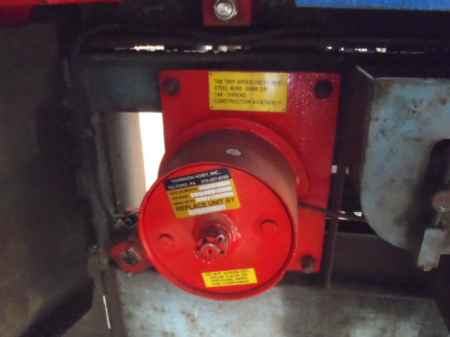
thought i would share this, we have 2 older motion control cars with ac drives and external braking control units. the building was doing a emergency generator test early one morning. everything was fine for the first 15 minutes or so, then the fire alarm system indicated a fire in the machine room. the engineers were on there way up when the emergency generator failed completely. Turns out that both braking units turned on, even with the cars parked at the fire floor, the units remained on until the braking resistors eventually melted and caught the top of the controllers and wiring on fire. the damage was significant as you can imagine. has anyone heard of such a thing? the only conclusion we can come to is that the emergency generator voltage output raised to a level that turned on the braking units, which heated up the resistors, just like a toaster , until the damage occurred. this could have been a lot worse, we only needed to replace the burned braking units, resistors, and melted wiring. luckily the building did not catch fire. it was a 17 story old folks home, they had no elevators for a few days, talk about a pain. there needs to be a circuit that will eliminate this kind of failure, the braking units should only be activated while the car is running and regenerating, not standing still. any ideas
|
|
|
|
|
Joined: Jan 2012
Posts: 37
newbie
|
|
newbie
Joined: Jan 2012
Posts: 37 |
Probably a good one to call Motion about...if you haven't already.
|
|
|
|
|
Joined: Aug 2011
Posts: 563
addict
|
|
addict
Joined: Aug 2011
Posts: 563 |
hey scott, is this not a pure vf drive unit but a early type of dc injection unit, or similar, for slow down and stop? a normal vf unit does this in 1 with the regeneration resitor on the side.
i would say it sounds like the supply was not quite the same as the normal supply ie like there was a dc supply on a ac circuit.if your using a seperate braking unit i wound be looking into somehow it got a back feed to fwd bias the diodes on the braking unit.
im spitballing here.
|
|
|
|
|
Joined: Apr 2011
Posts: 565
jack of all depts
|
|
jack of all depts
Joined: Apr 2011
Posts: 565 |
I'd put in a suitable contactor, that only picks when the brake is picked. Just parallel up the coils...
The normally open contacts would pass the DC bus voltage to the braking units. (or you could interrupt the flow between the braking unit and braking resistor network)
That would keep the braking units from bleeding off excess DC bus voltage inside the VVVF drive, unless the lift is running.
But you better send a sketch to MCE, and get them to bless it, because of the UL rating. They have sent me amended dwgs before, for my changes. You don't wanna incur any liability on yourself or company.
Can you also adjust the MAX INPUT VOLTS parameter in the drive, to shutdown the elevator, if the incomming 3 phase is too high? Who knows, maybe the buildings' generator is giving you a really high voltage, because they might set it for full building load, but with no load on the building, it migh tbe really high..Hell, IDK, just wondering..
Last edited by Vic; 06/19/12 11:07 PM.
|
|
|
|
|
Joined: Oct 2009
Posts: 404
troubleshooter1
|
|
troubleshooter1
Joined: Oct 2009
Posts: 404 |
we did contact motion, they have indicated that if the mainline voltage rises above a certain threshold, the braking unit will turn on regardless of the operation of the car. they were not to interested in suggesting a fix for the problem, just that this could occur under certain circumstances. we then looked into something from torqmax, they indicated there were some things that could help with this situation, one being a heat sensor next to the resistor grid that would shut down the braking unit. I like vics idea about the contactor, that would probably solve the situation. as far as the max input volts, id have to check on that, maybe thats a solution also. thanks for the input, i would think that someone out in elevator land has had this happen before, is this the first?
|
|
|
|
|
Joined: Apr 2011
Posts: 565
jack of all depts
|
|
jack of all depts
Joined: Apr 2011
Posts: 565 |
I had a problem with a Yaskawa braking unit, on an EC controller, with an Omron VVVF drive. In this case, it had nothing to do with the 3 phase input voltage being too high, but rather, the braking unit just would not shut off at all, regardless of the DC bus voltage level. It was just on all the time, even when not running, constantly putting the drive's internal DC bus across the dynamic braking resistors.
That made 'em burn up. Melted the paint on the controller cover, lots of smoke, set off the building fire alarms. Not a good day...
Last edited by Vic; 06/20/12 05:35 AM.
|
|
|
|
|
Joined: Apr 2012
Posts: 9
stranger
|
|
stranger
Joined: Apr 2012
Posts: 9 |
This is classic problem, Robicon drives from the 1980 -1990's would burn up the transformers the same way. The generator testing the load induces voltage on the lines. Older generators pump out pure wattage "no regulation" so any load on the system would be resistance example" the Brake Pre torque settings". We put fuses in brake controller circuit. that way if the genny is" out of phase" it only fries the fuses.
|
|
|
|
|
|
|
|
|
HW PM
by Chris, January 13
|
|
|
|
|
|
|
|
|
|