Scientific method requires examination of the evidence first-hand, then reaching a rational conclusion, based on the evidence. It has not been proven whether the lift broke traction, or slipped through the brake, or some other issue occured. Without expert examination of the equipment, no definite conclusions can reached at this time.
What is almost a cetainty, is that it DID NOT "drop" from the 6th floor, in a true freefall, as the public is so very fond of imagining. There is no way for the passengers to know exactly what the elevator did, without having the advantage of visual refrence. When you are "blind" inside a box, the theater of the mind conjures up the most fantastic scenarios, compounded by the fear of the unknown. The pit of one's stomach is not an arbiter of velocity, nor direction of travel. For example, a change in velocity in a given direction, is often reported as a change in direction, when that in fact is not the case. The Star Tours ride at Universal Studios doesn't move more than a few feet, but you'd swear your Tie Fighter was swooping down through chasms hundreds of feet deep in the Death Star. In the same manner, the publics' reporting of elevator motion is notoriously innacurate, especially with those who have a predisposition for being emotional.
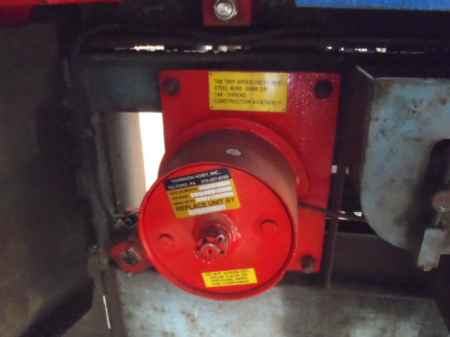
In this case, if it had actually fallen without restriction, it would have most likely had structural damage, and serious injurys. (The buffer is not designed to dissipate impact from "terminal" velocity, but rather, closer to contract speed velocity) It is very likely that the lift slowed down for the bottom floor in the normal manner, then after stopping, (upon the normal removal of torque from the motor that was slowing it down), either slipped through the brake, (or broke traction), then slid into the buffer. Of course, there are other possibilities, but no evidence demands no verdict.
As has been said, in any case, the fact of the elevator being overloaded precipitated the event.
Last edited by Vic; 09/16/11 12:07 AM.