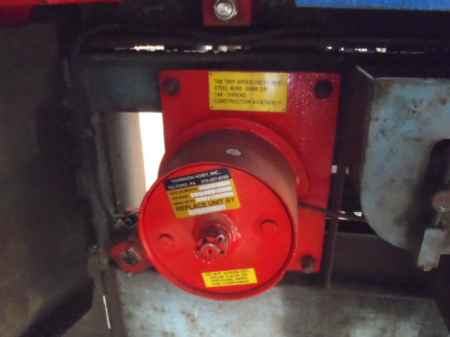
I dont have the Dover with the damp motor print-I have mostly Compumatic stuff. Most manufacturers put the field and armature in seperate circuits or isolated from each other by contacts. If your damp motor is not correct it would cause all kinds of issues. Once the damp motor is configured correctly be sure to add the fly wheel that was on the motor, if it had one-this would create a slower accel and decel slope. The damp motor armature is a direct short when voltage is first applied, effectively "shunting" voltage away from the hoist motor armature. As the damp motor picks up speed it increases in resistance there by allowing more voltage to the hoist motor armature. This gives you a fairly nice accel rate-depending on the weight of the damp motor fly wheel or lack there of. The damp motor field should always be constant-never changing-that is if its designed as Im remebering. The armature of the damp motor will be in series with some variable resistors and some accel contacts along with your "Up" and "Down" potential contacts. If your print does not show the damp motor field connected to the armature then I would deffenitly fix that first.